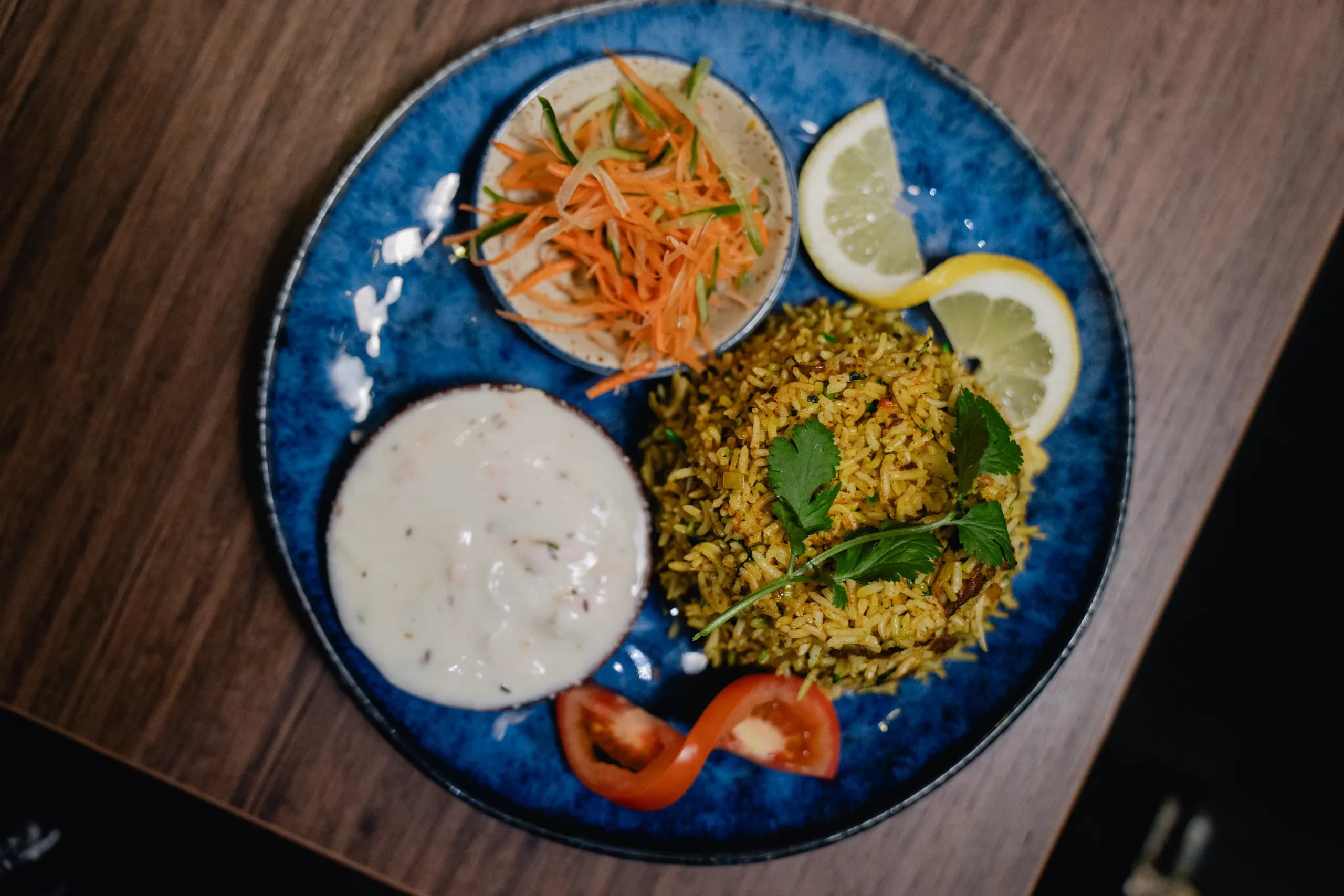
Few dishes carry as much history, or as much pride, as biryani. It is rice, yes, but to call it a rice dish undersells it. Biryani is a layered, slow-built celebration, and almost every region of the subcontinent makes its own.
A Mughal inheritance
Biryani is usually traced to the kitchens of the Mughal courts, where Persian pilaf met Indian spice. From there it spread and split: Hyderabadi biryani, fierce with chilli and cooked raw with the meat; Lucknowi or awadhi, gentler and more fragrant; Kolkata, with its famous addition of potato and egg. Each one tells you something about the place it comes from.
The dum method
What sets a good biryani apart is the cooking. Parboiled, spiced rice is layered with marinated meat or vegetables, sealed, and cooked on a low flame in its own steam - a technique called dum. The lid traps the aroma, the layers cook into one another, and nothing escapes. Lift it at the table and the whole thing arrives at once.
How to eat it
A biryani is a meal in itself, but it shines with a cooling raita on the side to balance the spice. Take your time with it; it was not built to be rushed, which makes it a poor choice before a show and a perfect one on a long evening.
On our menu
You will find biryani on our menu at both restaurants. For a relaxed, unhurried dinner, it is one of the most rewarding things to order.