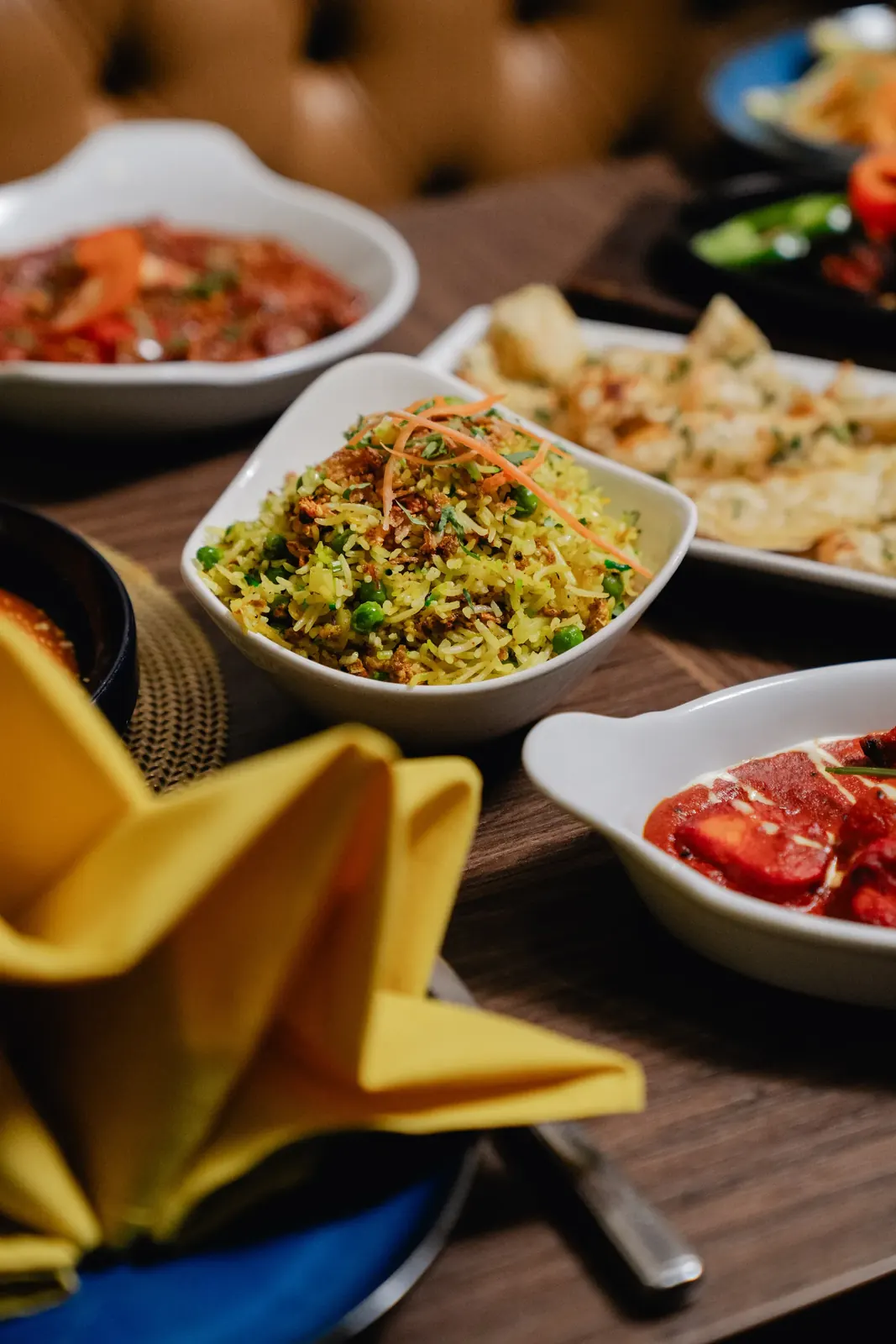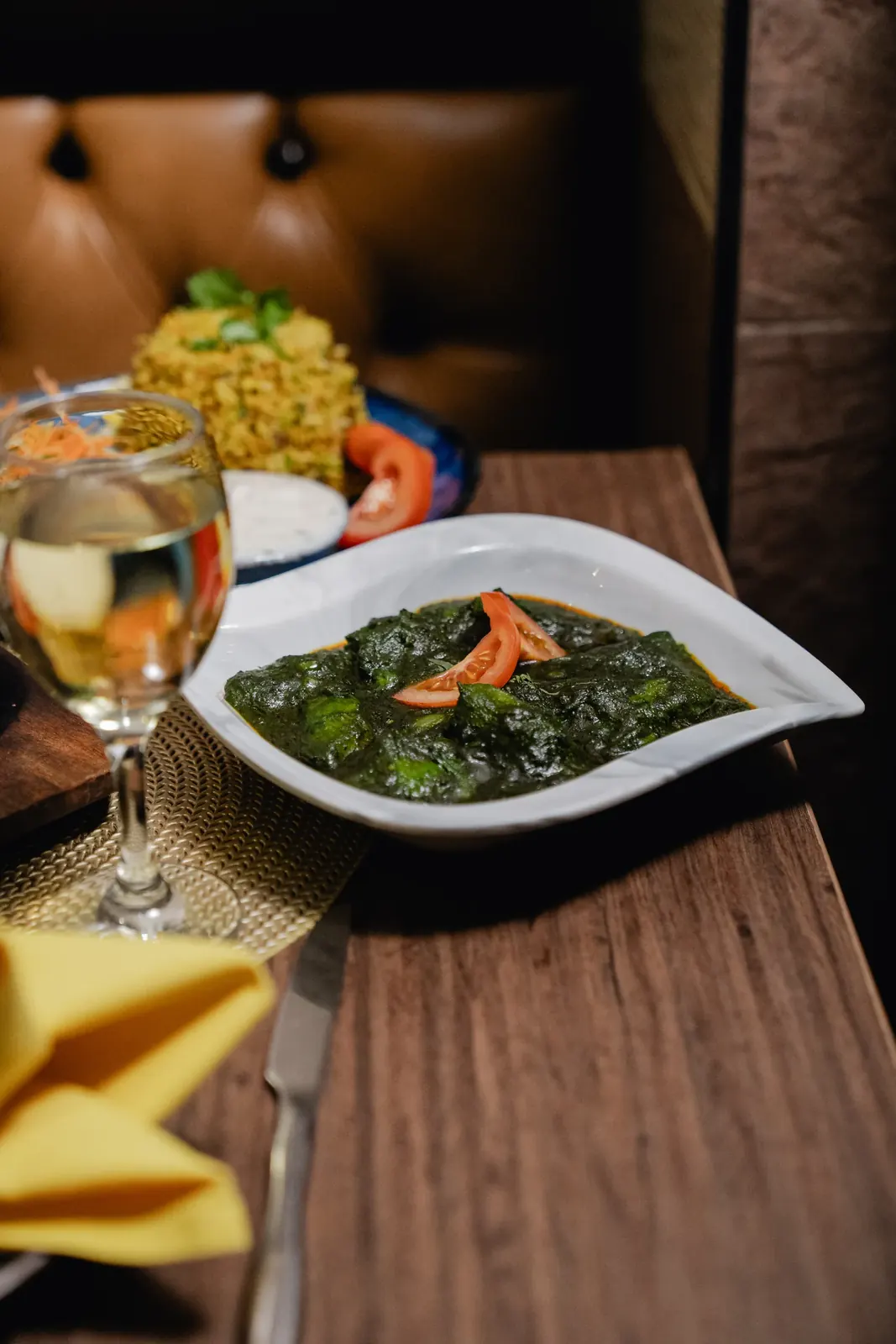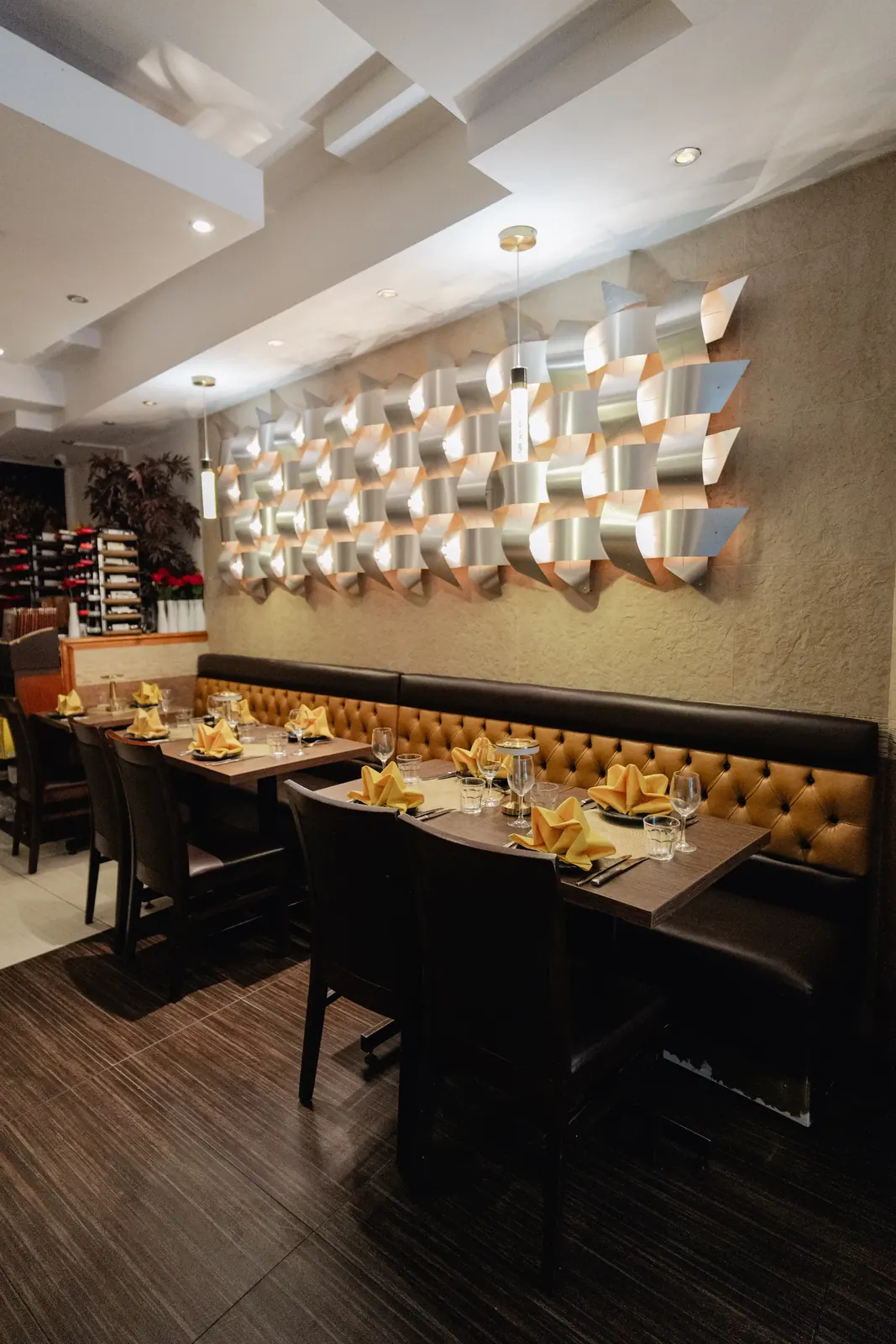
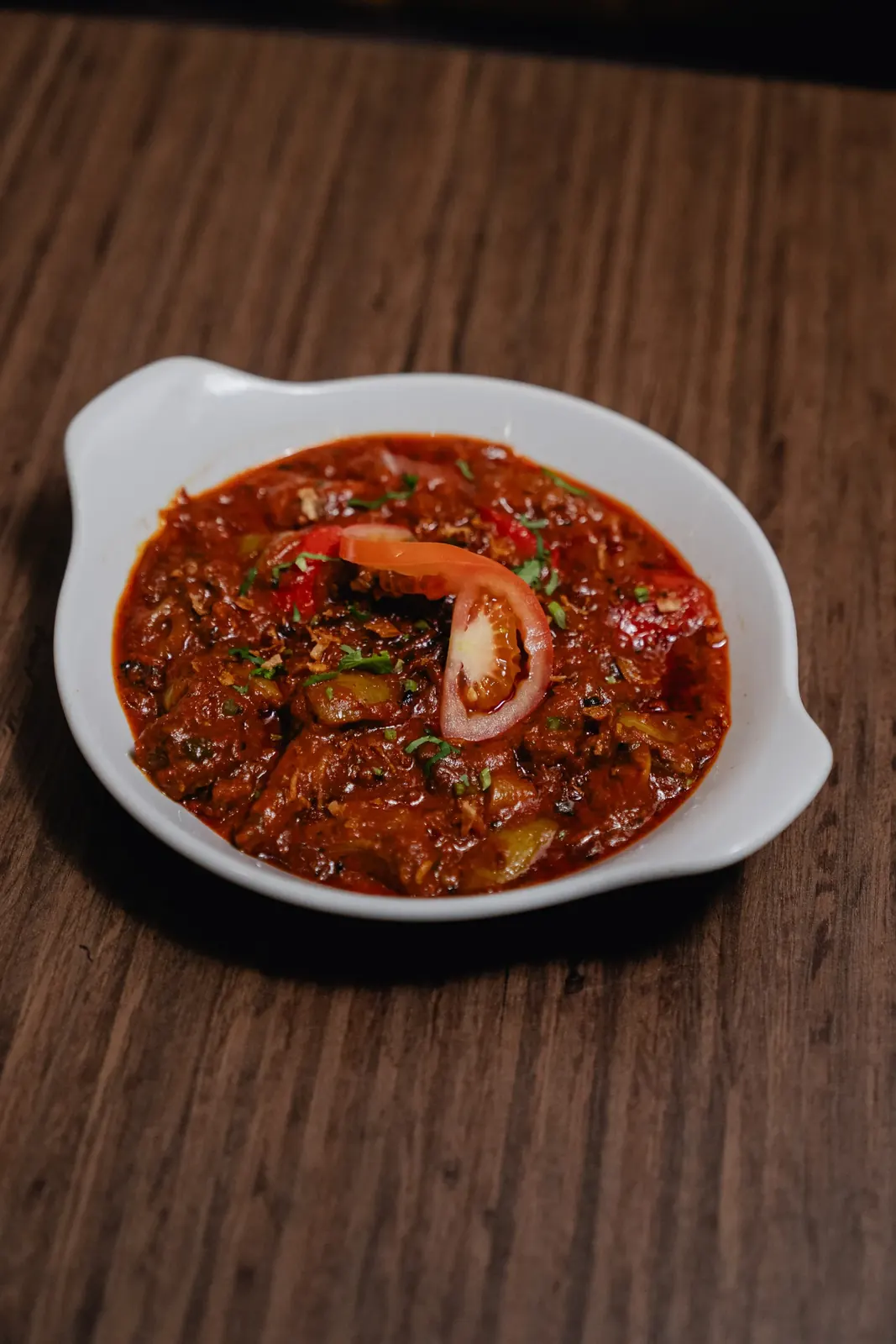
Madras, Vindaloo and Phall are the three names most people know when it comes to curry heat, but they sit at the top of a longer ladder. On our menu there are eleven Indian traditional dishes, and each one comes with your choice of chicken, lamb, paneer or king prawn. Knowing roughly where each sits for heat makes ordering at our West End restaurant much easier, whether you want something gentle or something that makes your eyes water.
Below we have lined them up from mildest to hottest, using the descriptions printed on our menu. Heat is personal, so treat this as a guide rather than a rule, and ask us if you are unsure.
Mild and gentle: Korma
Korma is cooked in a specially prepared creamy sauce. It is the softest of the traditional dishes and the one we point to for anyone who is new to Indian food or simply prefers flavour without heat. With king prawn or paneer it is rich and comforting. If you enjoy creamy sauces, our piece on cream in Indian cooking explains why they work so well.
Medium and savoury: Sagwala, Rogan, Bhuna and Dopiaza
This is the comfortable middle of the menu, where spice is there for flavour rather than fire.
- Sagwala: fresh spinach and garlic. Earthy and savoury, and lovely with lamb or paneer.
- Rogan: glazed tomatoes and fresh coriander, giving a bright, fresh finish.
- Bhuna: browned onions in a medium-thick sauce. Deeper and drier than most, it clings to the meat or paneer.
- Dopiaza: onion and peppers in a thick sauce. The name is usually said to refer to onions added twice, and you can taste the sweetness they bring.
If your table is split between people who like heat and people who do not, one or two of these make a safe shared choice.
Sweet, sour and spicy: Pathia and Dhansak
These two bring a little more warmth, balanced by sweetness and sharpness.
- Pathia: a spicy curry sauce with lemon juice and sweet notes. It is lively and tangy, and the sweetness takes the edge off the spice.
- Dhansak: a fairly hot sweet-and-sour lentil sauce. The lentils give it body, and it is a good step up for anyone ready to move beyond medium.
Hot: Madras and Jalfrezi
Here the heat becomes the point.
- Madras: fairly hot, strongly spiced with plenty of sauce. A curry house classic, and a good test of where your limit is. The plentiful sauce makes it ideal with pilau rice.
- Jalfrezi: fresh chillies and spring onions in a hot sauce. The fresh chilli gives a sharper, greener heat than the ground spice of a Madras.
Very hot and extremely hot: Vindaloo and Phall
Vindaloo is a spicy, tangy curry with garlic, ginger, chillies and ground spices. The dish is usually traced back to Goa, and its tang is a big part of its character alongside the heat. It is noticeably hotter than a Madras, so order it if you know you like it hot.
Phall sits at the very top: an extremely hot, spice-forward sauce. We describe it that way because it is. Order Phall if you genuinely enjoy intense chilli heat, and have a cooling side on the table.
How to handle the heat
- Pick your protein with care. Paneer and king prawn carry sauce differently from chicken and lamb. Paneer soaks up flavour, while king prawn stays sweet against a spicy sauce.
- Order something cooling. Raita, plain naan and pilau rice all soften the heat between mouthfuls.
- Mix the table. With friends, one mild, one medium and one hot curry lets everyone find their level. Our guide on how to order Indian food has more on building a balanced table.
- Tell us about allergies. Please tell us about allergies when you book. Our kitchen handles nuts, dairy, eggs, gluten, fish, shellfish, soya and sesame.
Whichever end of the scale you prefer, our kitchen at 19A Charing Cross Road cooks every one of these dishes, with the confidence of a restaurant established in 1960.
If you are heading to a show, our 2 Course Meal includes a traditional chicken dish with naan and pilau rice. Book a table for our Pre-Theatre menu, served 12pm to 5.30pm daily, and tell us your curtain time when you book.