No Indian meal is complete without bread. It is the plate, the spoon and half the pleasure, the thing you tear, fold and scoop with. Curries often get the attention, but bread shapes the whole meal. And there are far more kinds than the naan most people know.
Here is a guide to the main Indian breads, how they are made, and which to order with what.
Naan: the tandoor favourite
The famous one. Naan is a soft, leavened bread slapped onto the hot inner wall of the tandoor and peeled off a minute later, blistered and slightly charred. That fierce heat gives it its puffed texture and faint smokiness, which is why a naan from a real clay oven tastes so different from one warmed at home.
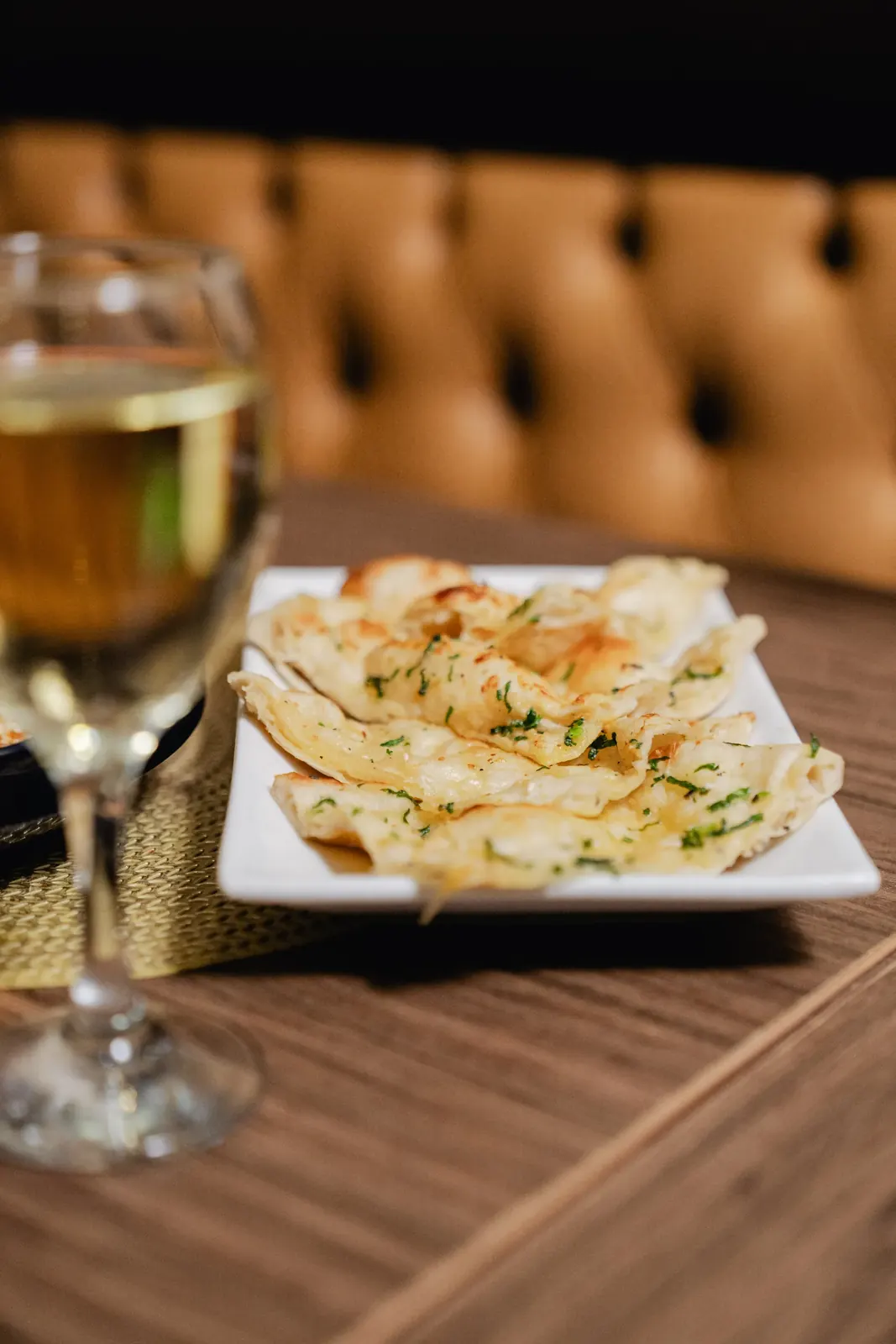
Naan comes in many versions. On our menu you will find Plain, Butter, Garlic or Kulcha, Cheese, Garlic and Cheese, Chilli, Keema (with spiced minced lamb) and Peshwari. A plain or butter naan suits any curry; a garlic naan is a favourite with creamy dishes; a keema naan is almost a meal in itself. Read more about the oven in inside the tandoor.
Roti and chapati: the everyday bread
Lighter and unleavened, roti is the everyday bread of many Indian homes, a simple wholemeal flatbread made fresh for almost every meal. At home it is usually cooked on a flat griddle called a tawa, sometimes finished over an open flame so it puffs up. Chapati is a close relative, and the names are often used interchangeably.
A tandoori roti is baked in the clay oven instead, giving it a firmer, slightly crisp texture. Both are made without yeast and are usually lighter than naan, making them good with drier dishes and anyone who wants to leave room for more.
Paratha: layers of comfort
Paratha is richer and flakier. The dough is folded with ghee or oil to build layers, then cooked on a griddle until crisp outside and soft within. It can be plain or stuffed, most famously with spiced potato as aloo paratha, but also with cauliflower, paneer or peas. In the north of India a stuffed paratha with yoghurt and pickle is a classic breakfast.
Festive and regional breads
Beyond the everyday, India's regions have breads beyond counting. A few worth knowing:
- Puri: small rounds of dough fried until they puff into golden balloons, often served at festivals with potato curry, chickpeas or sweet halwa.
- Bhatura: a larger, softer fried bread, the classic partner to spicy chickpea chole in Punjab.
- Kulcha: a soft leavened bread associated with Amritsar, often stuffed and baked in a tandoor.
- Appam: a lacy, bowl-shaped pancake from Kerala made with fermented rice batter and coconut.
- Papad: thin, crisp discs made from lentil flour, roasted or fried and eaten for crunch.
Each suits a different dish and a different mood, and each tells you something about the region it comes from. Our guide to regional Indian cuisine has more on where they fit.
Bread and balance
Bread does more than fill you up. Warm bread softens the heat of a spicy sauce and balances strong flavours. It turns eating into something hands-on: you scoop, wrap and dip, and the meal becomes more sociable as a result.
There is a health angle too. Wholemeal roti made without oil is light and filling, while paratha and puri are richer treats best enjoyed in moderation. Many home cooks also now experiment with millet and other traditional flours for extra variety.
How to order breads
- Order more than one kind. A plain naan and a garlic naan between two, or a naan and a tandoori roti, gives you contrast.
- Match the bread to the sauce. Soft naan is made for creamy, saucy curries; roti suits drier dishes and dall.
- Keep them coming. Breads are best straight from the oven, so it is worth ordering a second round rather than all at once.
- Don't forget rice. Many diners enjoy both, with rice for the sauce and bread for scooping.
Fresh from our tandoor
Our breads are baked in the tandoor throughout service at Charing Cross. Before a show, our Pre-Theatre menu includes naan and pilau rice with every main, served from 12pm to 5.30pm daily. Book a table and tear in.