Dining is not only about taste. The dining acoustic experience, meaning the music, the volume and the way a room carries sound, shapes mood, pace and even how flavours are perceived. We notice lighting, décor and aroma straight away, but sound often works on us without our realising. Get it right and a meal feels easy and memorable; get it wrong and even good food can feel like hard work.
Why sound matters in a restaurant
Restaurants put a great deal of thought into interiors, menus and service, and sound deserves the same attention. Soft music tends to calm a room. Upbeat tracks bring energy. Volume matters as much as the playlist: too loud and guests feel distracted and tired, too quiet and the room can feel flat and self-conscious.
Can sound change how food tastes?
Research into how our senses interact suggests that it can. Some studies have found that higher-pitched music can make food seem sweeter, while lower tones are linked with bitterness and richness. Tempo appears to affect pace too: slower, relaxed music tends to slow diners down, while faster music can speed them up. The effects are subtle, but they help explain why the same dish can feel different in different rooms.
Sound as part of the whole room
Good sound works with the décor, lighting and service rather than against them. A formal dining room usually suits softer music and a hushed background. A lively, casual place can handle more energy and chatter. In both cases the aim is that guests hear the music and each other, not the clatter of cutlery or the table three along.
Acoustics: the part you don't see
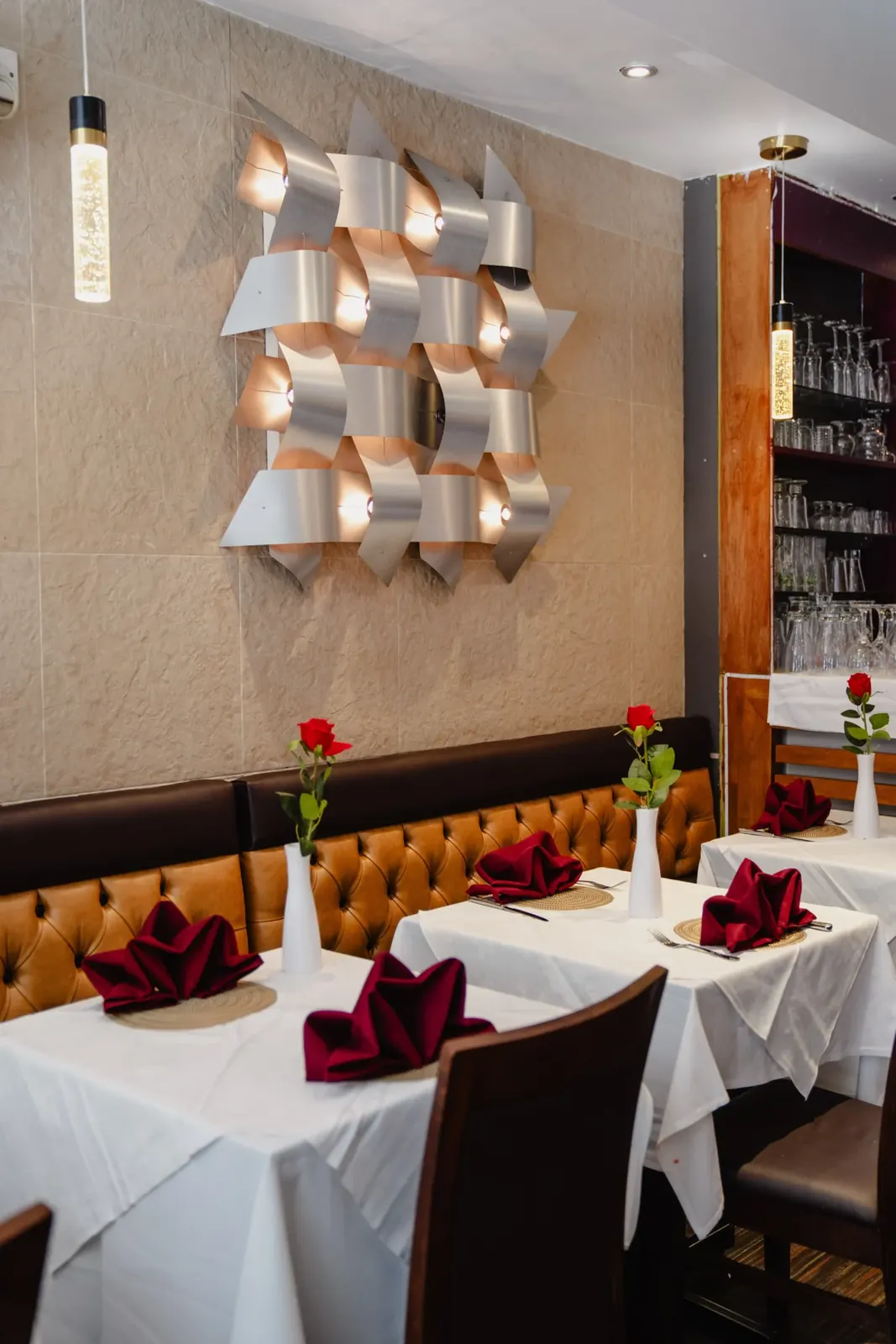
Beyond the music, the room itself matters. Hard surfaces bounce sound around, so conversation becomes a strain and voices rise to compensate. Soft furnishings, upholstered seating, fabric and wood all absorb some of that noise. When the acoustics are balanced, people relax, lean in and stay a little longer.
Some restaurants now use systems that adjust music volume to the size of the crowd, or shift the playlist through the day, lighter at lunch and fuller in the evening. The goal is the same: an atmosphere that always feels right for the moment.
Sound, memory and occasion
Sound also sticks in the memory. People remember the song that was playing at an anniversary dinner, or the buzz of a big family celebration. Music that suits the food can add to a sense of place, just as sitar or tabla can frame an Indian meal. When sound, food and company line up, the evening is easier to remember and more likely to be repeated.
For restaurateurs, this is why sound is no longer an afterthought. Guests don't separate food from feeling, and a beautiful plate means little if the room makes conversation difficult.
What the future may sound like
Sound design is likely to become more personal. Some restaurants are experimenting with zones of different music, carefully placed speakers and even soundscapes matched to particular dishes. Whether or not those ideas catch on, the basics will stay the same: a comfortable volume, a room that lets people talk, and music that suits the food.
A table where you can talk
For us, the best sound in a restaurant is a table of people enjoying a meal together. If you are planning a celebration, our private dining gives your party its own space, and our group set menu means nobody has to shout across the table to agree an order. Browse the menu, then book a table for your group.