Indian cooking rarely puts a dish on the table alone. Almost everything has a partner: something cooling beside something hot, something crisp beside something soft. These classic Indian food pairings are not accidents. They have been refined over generations of home cooking, and once you know them, an Indian menu becomes much easier to read.
Here are the pairings worth knowing, why they work, and how to find them at the table.
The logic behind Indian food pairings
Most pairings follow a few simple rules. Heat meets something cooling, so a fiery curry sits beside yoghurt or plain rice. Crunch meets smoothness, so a crisp fritter comes with a soft chutney. Richness meets sharpness, so a buttery bread is lifted by a tangy pickle. The aim is balance: no single flavour is allowed to take over the meal.
Pairings also carry meaning. Snacks shared with tea in the late afternoon, sweets offered alongside savoury dishes at festivals, a simple dal and rice on an ordinary weeknight. In many households these combinations are as much about habit and memory as taste. Some cooks also link them to Ayurveda, the traditional Indian system of health, which puts weight on balancing different qualities within a meal.
Everyday classics
Chai and samosa
Across India, a cup of sweet spiced tea with a hot samosa is one of the most familiar snacks there is, sold everywhere from street stalls to railway platforms. The tea cuts through the richness of the fried pastry, and the spice in both ties them together.
Paratha and pickle
A flaky, buttery paratha is good on its own, but a spoonful of sharp, oily pickle turns it into a proper breakfast. The pickle's sourness and heat stop the bread from feeling heavy.
Dal and rice
Dal and rice is the everyday comfort meal of many Indian homes. Lentils bring protein and depth, rice brings softness, and together they make a meal that is filling, gentle and easy to digest.
Festive pairings
Biryani and raita
Biryani is fragrant and richly spiced, and raita, a yoghurt side with herbs and a little spice, cools each mouthful. The creaminess keeps the spice in check and adds freshness to every spoonful.
Puri and halwa
At festivals and family gatherings, puffed fried puri is often served with halwa, a sweet semolina pudding. Crisp bread and soft sweetness together feel generous and celebratory.
Jalebi and rabri
Jalebi, bright spirals of batter soaked in syrup, is often eaten with rabri, a thickened, sweetened milk. The crisp sweetness of one against the creamy richness of the other makes it a favourite festival and late-night street food treat.
Regional pairings worth exploring
Idli and sambar
In South India, soft steamed rice cakes meet sambar, a tangy lentil and vegetable stew. Mild and bold, plain and spiced: it is balance in a single breakfast.
Chole and bhature
In the north, spicy chickpea curry is paired with bhature, a large, puffed fried bread. The intensity of the chickpeas suits the soft, slightly chewy bread.
Fish curry and rice
Along the coast, fish curry sharpened with tamarind or softened with coconut is almost always served with plain rice, which soaks up every drop of the sauce.
Pairings to try at our table
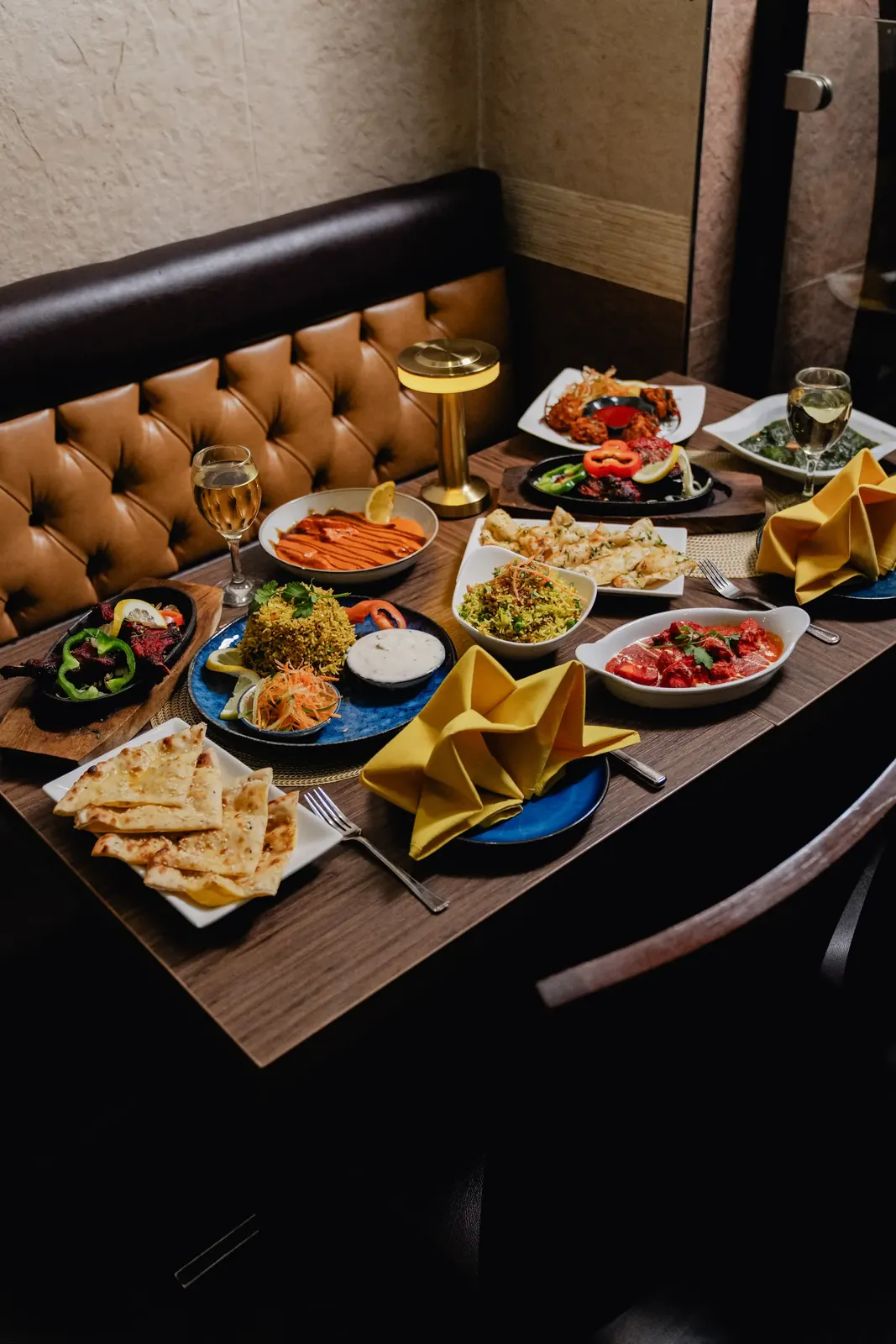
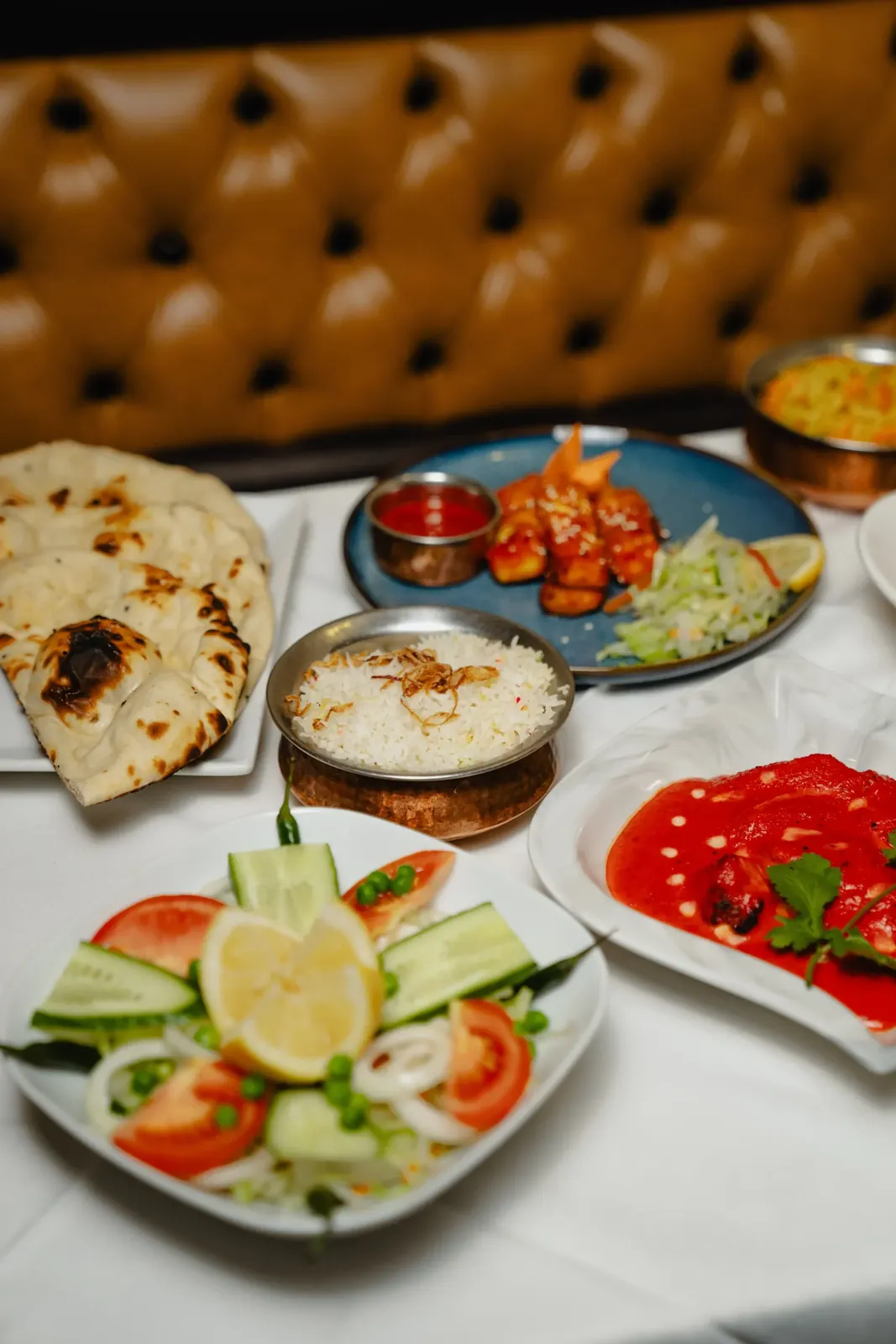
You don't need to travel to put these ideas to work. On our menu, the same logic applies. Order a biryani with a side of Raita. Try the Onion Bhajee with its chutney, or pick up the Chutney Tray to share. Put a creamy Butter Chicken beside a hotter Jalfrezi, and mop both up with a Garlic Naan and Pilau Rice. Tarka Dall with plain rice is the restaurant version of that everyday dal and rice. For more ideas on balancing a table, see our guide to the best Indian dishes for sharing.
Coming with a group? Our group set menu is built on the same idea, with the Maharaja Mixed Starter, a main each, pilau rice and plain naan. Book a table and let the pairings do the work.